
AGV system in BKR aluminium - Vyskov - Czech Republic - AGVision
- Home
- AGV system in BKR aluminium – Vyskov – Czech Republic

AGV system in BKR aluminium – Vyskov – Czech Republic
Following the success of the AGV system operating at BKR, where electronic components for skylights are produced, the Danish company Velux decided to expand the “turtle” AGV system to the aluminum profile production area.
To do this, it purchased three additional turtle AGVs to accommodate the new flows.
Nothing changes for the A4 AGV system in the warehouse.
These new flows involve the L2 AGVs that transport trolleys with pallets on board and the L2 AGVs that transport cardboard boxes.
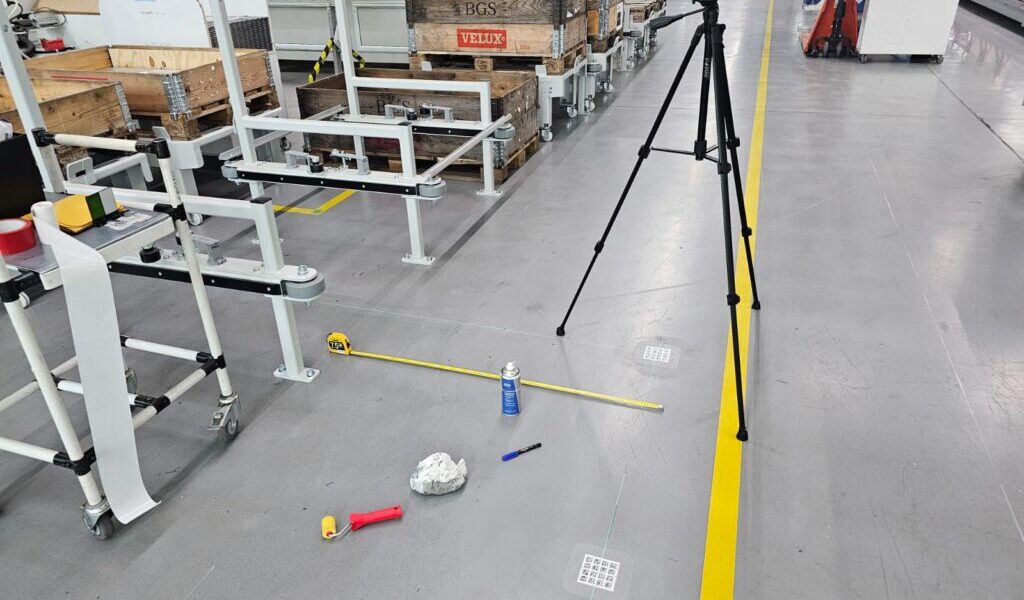
Many additional QR codes were added to allow the AGVs to navigate the new layout.
We have been responsible for:
designing the new layout in consultation with the customer
placing the QR codes using laser tools
defining the AGV routes with fine-tuning tests for each new station
defining the new rules for intersection management, traffic control, and mission assignment
This was an almost ideal commissioning, in the sense that we were ready before production was ready for the new flows, and when the AGVs began serving the new area, no serious errors appeared, only a few small positioning errors, which were quickly resolved.
The number of DI/DO signals managed by the server continued to increase, making it the project with the highest number of signals managed in the field by the central server.
Due to the high number of telegrams exchanged via Wi-Fi and between the central server and the database server, targeted response time optimization efforts were necessary with Velux IT staff.
After purchasing three additional turtle AGVs, the A4 AGV warehouse management system became a bottleneck, therefore, a flow, navigation, and transport assignment optimization effort was conducted to improve the performance of the A4 AGV system in the warehouse.
AGV navigation type: Laser for the A4 AGVs and QR codes for the L2 AGVs.
AGV system controller: a server provided by the customer, where our system and SQL server have been installed. Communication with the host is via TCP/IP, communication with signals is via Modbus, communication with PLCs is via UDP, communication with the AGVs is via WiFi.
Charging concept: charging stations with contacts on the side of the AGV (A4) or in front of it (L2), when batteries are low, the vehicle is sent there to stay and charge, as well the AGV goes on charger when there are no transports to execute.
This AGV system is working over three shifts.
Number of AGVs: 6 A4 + 12 L2
AGV manufacturer: AGVE
Function: AGV navigation software and AGV system manager development, plus on site project leader
Year: 2025